
Maple Dungeon
Five ElementsAdventure
4.1207.00 Reviews
- Version
- 18
- Installs
- 100.00K
- Age Rating
- Everyone 10+
Screenshots


Our Review of Maple Dungeon
 Analysis by Appyee
I tend to enjoy adventure games most when they fit around real life rather than demand a long, uninterrupted session. Maple Dungeon caught my eye as a pixel-art role-playing game, and its idle-adventure framing makes it sound suited to players who like gradual progress alongside dungeon exploration. I’d approach it as a casual RPG to dip into, not as a guaranteed substitute for a deep, hands-on dungeon crawler.
What the free entry does—and doesn’t—settle
The game is free to download, which means you can try its basic experience without paying upfront. That is the clearest part of its value: you can see whether its retro presentation and adventure-RPG style suit you before deciding whether to spend anything. Optional in-app purchases range from $0.99 to $99.99 per item, so the free starting point should not be confused with every possible purchase being inexpensive.
I’d set a simple boundary before playing: enjoy the free access first, then consider an optional purchase only if you understand what it provides and genuinely want it. The listed price range tells me purchases are available at very different levels, but it doesn’t tell me which items are necessary or whether spending changes the pace substantially. If you prefer games with a known one-time cost and no purchase choices, that uncertainty may make a paid, self-contained RPG a more comfortable pick.
Where its value is likely to come from
For me, the appeal is the combination of a familiar pixel-art look and an adventure RPG structure that suggests progress can happen without every moment being active play. That can be a useful fit when I want a game I can check between other tasks, rather than one that expects me to reserve a full evening. The key question is whether the loop of returning to a dungeon adventure feels rewarding to you; a free download is only good value if you enjoy the routine it creates.
Five Elements is the developer, and the game has a 4.5 average from around 3.7 thousand ratings, with over 100,000 installs. Those figures suggest that it has found an audience, but they cannot tell you whether its pacing or purchase options match your preferences. I’d treat them as a reason to take a look, not as a guarantee that you’ll enjoy it.
Getting Started with Maple Dungeon
When you first launch Maple Dungeon, you’re greeted with some charming 2D graphics that give off an old-school RPG vibe. It’s like stepping into a pixelated wonderland where every corner holds a secret. The game kicks things off with a quick tutorial that’s super handy for newbies like me. It’s straightforward and ensures you’re not left scratching your head about what to do next.
One thing I noticed right away is how intuitive the controls are. Whether you’re battling goblins or navigating through shadowy corridors, the touch controls are responsive and smooth. It’s as if the developers knew exactly how to make it easy for us to lose ourselves in the game.
The Gameplay Experience
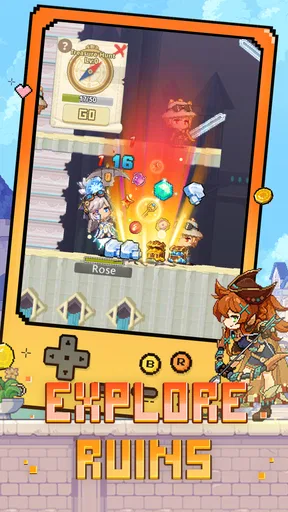
Now, let’s talk about the meat and potatoes of the game—the gameplay. Maple Dungeon is all about exploring, battling, and looting. Each dungeon is randomly generated, which means no two runs are the same. It keeps things fresh and exciting, with surprises lurking at every turn.
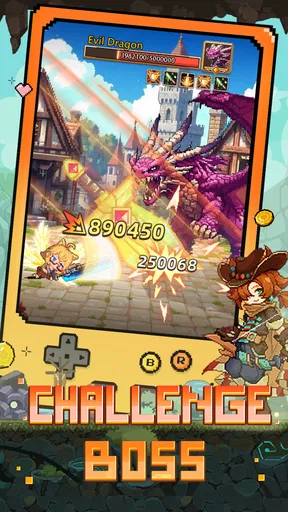
Combat is where things get really interesting. You have a variety of skills and spells at your disposal, allowing for some strategic depth. It’s not just about button-mashing; you’ll need to think on your feet and adapt to the different enemies you face. The bosses, in particular, will test your skills and patience. They’re tough, but defeating them brings a sense of accomplishment that’s oh-so-satisfying.
Thinking about the trade-offs before you settle in
The pixel-art presentation and dungeon-running premise point toward a particular kind of appeal: repetition with enough variation to make another run feel worthwhile. That is different from an adventure game built around a carefully authored story, where the main draw is discovering what happens next. If I want a narrative that carries me from one set-piece to another, I’d choose that kind of game instead; here, I’d come for the repeated play loop and the satisfaction of improving at it.
There is also a useful distinction between an idle game and a hands-on action RPG. “Idle” in the framing may attract people hoping for progress with very little attention, while the combat described here still asks you to make tactical choices. I would not assume that every part of play can be left unattended. If you want a game that needs no decisions at all, a more passive idle title may fit better. If you enjoy checking in but still want moments that ask you to react, this mixture may be more appealing.
Making short sessions work
A realistic way I’d fit it into a day is to open it during a quiet break, handle a bit of dungeon play, and stop when I need to return to work or errands. That kind of use rewards a game whose controls are easy to pick up and whose theme is clear quickly. I would avoid starting a demanding boss encounter when I only have a minute to spare, though: the original experience describes bosses as challenging, and a rushed attempt can turn a pleasant break into frustration.
One practical habit is to treat each visit as a small goal rather than expecting a long session to feel productive. I might focus on exploring, testing a skill choice, or making progress toward an upgrade, then leave the rest for later. That keeps the game from becoming a background obligation. It also helps me notice whether the progression is enjoyable on its own or whether I’m only returning because I feel I should keep up.
Character Customization and Progression
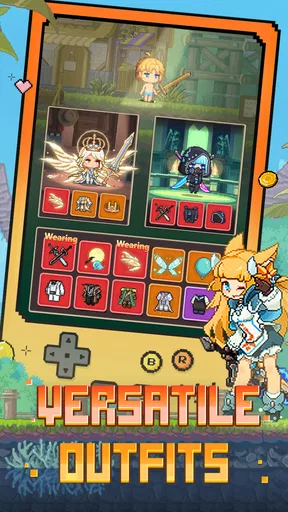
As you progress, you’ll earn experience points and loot that you can use to upgrade your character. The customization options are pretty robust, letting you tailor your hero to fit your playstyle. Whether you want to be a spell-slinging mage or a sword-wielding warrior, the choice is yours. This flexibility keeps the game engaging as you experiment with different builds.
Leveling up feels rewarding, and the game does a great job of gradually ramping up the difficulty. It’s a nice balance that keeps you on your toes without feeling overwhelming. Plus, the sense of growth and power as you upgrade your gear and abilities is addictive.
Progress without turning play into a chore
When a game offers upgrades and loot, it is tempting to chase every improvement. I’d instead pay attention to whether a new upgrade changes how I approach an encounter, rather than judging progress only by bigger numbers. Since the game offers different character styles, trying a contrasting build can be more revealing than repeatedly polishing the same one. If experimentation feels fun, the customization has real value; if it feels like maintenance, the progression may not suit you.
The trade-off is that RPG progression often asks for patience. The earlier experience of this game notes some grinding and difficulty jumps, so I would expect the pace to feel less smooth at certain points. That does not automatically make the challenge unfair, but it does mean this is a better choice for someone who can accept a slow patch than for a player who wants every session to deliver a quick, tidy win.
What to expect from the look and sound
The retro visual style is a strong part of the game’s identity, but pixel art is a matter of taste. If I’m in the mood for crisp, modern 3D environments, this is not the look I’d choose. Its 2D presentation instead suits someone who likes compact, readable fantasy settings and the nostalgic feel of older role-playing games. That visual choice helps define the experience rather than acting as a substitute for its gameplay.
The earlier impression of a fitting soundtrack is worth considering for the same reason: sound can make a short session feel more involving, but it is personal. I’d try the game in the kind of setting where I usually play and see whether its audio adds atmosphere or becomes something I’d rather mute. That small test can help answer whether it works as a quiet break-time game or feels better as a more focused play session.
Before installing: age, compatibility, and expectations
The content rating is Everyone 10+, a useful point for families deciding whether the game is appropriate for a younger player. It is free to start, but because individual in-app purchases can be much more expensive than the smallest option, I’d make sure the person playing understands that purchases are optional and discuss spending expectations first. That is practical advice for any game with a broad purchase range, not a claim that payment is required to enjoy this one.
On Android, the listed minimum requirement is version 6.0, and the current game version is 8. The game was released on December 7, 2025. I’d check that a device meets the operating-system requirement before trying to install it, particularly if it is an older phone. The store’s age label and device requirement answer different questions: one is about suitability, the other about whether the software can run.
It is also worth separating audience popularity from personal fit. The game has 152 written reviews alongside its rating total, but a rating average cannot tell me how much someone values active combat, gradual character growth, or a retro look. I’d use other players’ opinions as context and focus my own decision on those preferences. If I dislike repeating runs or waiting through a slower stretch of progression, popularity will not make that loop more enjoyable.
Visuals and Soundtrack
I have to give a shoutout to the game’s visuals and music. The retro pixel art is beautifully designed, with vibrant colors that bring the dungeons to life. Each level has a unique theme, making exploration a feast for the eyes.
And the soundtrack? It’s a total banger. The music perfectly complements the action, enhancing the atmosphere and drawing you further into the game’s world. Whether you’re in the middle of an intense battle or quietly exploring a dungeon, the tunes set the right mood.
Who is most likely to get their money’s worth?
I’d recommend giving it a try if you like adventure RPGs, enjoy a retro presentation, and find character-building satisfying enough to return for another run. It is especially appealing if your normal gaming time comes in short pockets and you like the idea of progress that does not depend on one long, uninterrupted sitting. The free entry makes that initial test easier, as long as you keep the optional purchase range in mind.
I’d be more cautious if I want a tightly plotted adventure, dislike grinding, or prefer a game whose full cost is clear upfront. A conventional premium RPG is a better match for a fixed-price experience, while a more straightforward action game may suit someone who wants immediate combat without much progression to manage. Maple Dungeon sits closer to the repeatable RPG side of the adventure category, so its value depends on whether that rhythm clicks for you.
Final Thoughts
So, what’s the final verdict on Maple Dungeon? If you’re a fan of dungeon crawlers or classic RPGs, this game is definitely worth your time. It combines engaging gameplay, charming visuals, and a killer soundtrack to create an experience that’s both nostalgic and fresh.
Sure, there’s a bit of grinding involved, and some might find the difficulty spikes challenging. But for me, that’s part of the fun. It’s a game that rewards perseverance and strategy, and there’s something deeply satisfying about emerging victorious from a tough dungeon run.
In conclusion, whether you’re a seasoned gamer or just looking for a fun way to pass the time, Maple Dungeon is a delightful addition to your app library. So, what are you waiting for? Grab your gear, and let’s get dungeon crawling!
Verdict
Strengths of Maple Dungeon
- Engaging and immersive gameplay experience.
- Stunning graphics with rich detail.
- Wide variety of characters to choose from.
- Regular updates with new content.
- Intuitive controls enhance user experience.
Limitations of Maple Dungeon
- In-app purchases can be costly.
- Occasional connectivity issues.
- Requires significant device storage.
- Some levels can be very challenging.
- Limited offline functionality.
Similar Picks in This Category
View All
Roblox
Roblox Corporation4.2

Pokémon GO
Niantic, Inc.3.5

Ninja warrior: legend of adven
TOH Games4.6

Ninja Arashi
Black Panther4.6

Eyes - The Horror Game
Fearless Games sp. j.4.5

Critical Action:Gun Strike Ops
FPS Shooter & Action Game4.3
Frequently Asked Questions
What is the main objective of Maple Dungeon?
Maple Dungeon is a role-playing game (RPG) that immerses players in a mysterious underground realm. The primary objective is to explore various dungeons, defeat formidable bosses, and collect valuable treasures. Players can also customize their characters and improve their skills to tackle increasingly challenging levels.
Is Maple Dungeon free to play?
Yes, Maple Dungeon is free to download and play. However, it contains in-app purchases that can enhance gameplay. Players can buy items such as special weapons, outfits, or additional energy. These purchases are optional and the game can be fully enjoyed without spending money.
What platforms support Maple Dungeon?
Maple Dungeon is available on both Android and iOS platforms. Users can download it from the Google Play Store for Android devices and the Apple App Store for iOS devices. Ensure your device meets the minimum system requirements for optimal performance.
Does Maple Dungeon require an internet connection?
Maple Dungeon can be played offline, allowing players to enjoy the game without a constant internet connection. However, certain features, such as multiplayer modes and in-game events, require online access. It’s recommended to connect occasionally to receive updates and new content.
Are there any age restrictions for Maple Dungeon?
Maple Dungeon is rated for ages 12 and up due to its fantasy violence and mild language. Parents should review the content to ensure it aligns with their comfort level for younger players. The game also includes community features, so monitoring interactions is recommended.
Play our best games!


